
Discover Salt Lake City Homes for Sale: Your 2026 Buying Guide
Salt Lake City combines a fast-growing tech economy with access to the Wasatch Mountains, drawing both first-time and move-up buyers. According to U.S. Census QuickFacts, the city’s population reached roughly 205,000 residents by 2023, reflecting steady growth through the decade. This momentum shapes inventory, pricing, and competition across neighborhoods from Sugar House to the Marmalade District. Understanding how schools, transit, outdoor amenities, and pricing tiers intersect can help buyers align long-term financial goals with daily life in Salt Lake City.
What market trends define Salt Lake City homes for sale in 2026?
Salt Lake City’s housing market remains shaped by in-migration from other Western states and a strong local job base along Silicon Slopes. According to Redfin, as of early 2026 typical sale prices for Salt Lake City homes fall in a broad range from roughly $450,000 to $700,000, depending on neighborhood and property type. Limited buildable land near the mountains concentrates demand in established areas such as The Avenues, Sugar House, and Capitol Hill, creating consistent competition for well-maintained properties.
Inventory levels influence how quickly offers must be prepared. Based on data from Redfin, many listings in early 2026 still move from active status to pending in roughly 10 to 20 days, especially near Liberty Park and the 9th & 9th district. This relatively short market time suggests that pre-approval letters, down payment plans, and inspection strategies need to be organized well before touring begins, particularly in popular school zones.
Affordability remains a central concern. According to Zillow, overall Salt Lake City home values increased in the mid-single-digit range, around 4% to 6% annually through late 2025. While this pace is slower than the surge seen in 2020–2021, it still outperforms many regional markets. For long-term owners, this historically consistent appreciation helps support equity growth, especially for detached homes east of State Street and along Foothill Drive.
Which Salt Lake City neighborhoods best fit different buying goals?
Sugar House appeals strongly to buyers prioritizing walkability, parks, and independent businesses. According to Walk Score, portions of central Salt Lake City score in the 70 to 80 range for walkability, and Sugar House’s core streets near 2100 South and Highland Drive mirror those numbers. Proximity to Sugar House Park, Fairmont Park, and the Parley’s Trail system adds daily access to green space, while dining along Wilmington Avenue and 1100 East supports a lively evening environment.
On warm summer evenings near 9th & 9th, the scent of espresso from Coffee Garden mingles with grilled food drifting from nearby patios, while string lights reflect off storefront windows along 900 South. A slow hum of conversation and low music spills from restaurants like East Liberty Tap House as cyclists roll along 1100 East toward Liberty Park. Tree canopies filter the last orange light over historic bungalows, giving the blocks around Gilmer Drive and Laird Avenue a distinctly relaxed, lived‑in atmosphere.
Families often focus on school access. According to GreatSchools, East High School on 1300 South holds a solid rating in the city system, and areas feeding into East, such as Yalecrest and Harvard-Yale near 1300 East and 1700 South, frequently attract long-term owners. Meanwhile, the Avenues neighborhood north of South Temple Street offers quick access to the University of Utah and the University of Utah Hospital complex, making it appealing for medical and academic professionals seeking shorter commutes.
How do prices and property types vary across Salt Lake City?
Pricing across Salt Lake City homes for sale shifts notably between downtown condos, historic single-family homes, and newer construction on the city’s western edges. According to Realtor.com, entry-level condos downtown and near Gateway typically list in the approximate range of $320,000 to $420,000 as of early 2026. Townhomes near Ballpark Station and along Main Street commonly stretch into the $450,000 to $550,000 band, while renovated bungalows in Liberty Wells and Rose Park vary depending on lot size and updates.
Single-family properties east of 900 East generally command premiums, largely due to proximity to the foothills and sought-after schools. According to Zillow, many detached homes in neighborhoods such as Federal Heights, Yalecrest, and St. Mary’s fall into a broad range from about $800,000 up to $1.3M, with luxury properties above that threshold. A small number of estate-style homes near Donner Way and Arlington Drive can reach around $2.4M in prime condition with updated interiors and strong views.
Newer construction tends to cluster farther west toward the Jordan River Parkway Trail and along 4000 West, where larger tracts of land remain available. According to current surveys by Redfin, many newly built homes and townhomes in that corridor trade in the approximate range of $450,000 to $650,000. These properties often offer attached garages, modern energy efficiency, and open floor plans, providing an alternative to older housing stock near downtown and the University of Utah campus.
What daily life factors matter most when comparing Salt Lake City homes?
Commute patterns shape many purchase decisions. The TRAX light rail network links downtown, the University of Utah, and the airport, reducing reliance on I‑15 and I‑80 for some commuters. According to Utah Transit Authority, TRAX runs three main lines with frequencies often in the 15-minute range during peak periods. Homes within a half-mile of stations such as Central Pointe, Stadium, and City Center often hold particular appeal for residents who prefer predictable transit over highway driving.
Early mornings around Liberty Park bring a different rhythm, with the soft slap of running shoes on the loop path, sprinklers misting the grass near Tracy Aviary, and the smell of damp earth rising from flower beds. Cyclists glide past the pond as sunlight catches the water, and dogs tug leashes toward the off-leash area along 700 East. Nearby, small homes on Roosevelt Avenue and Emerson Avenue feel closely connected to this daily soundtrack of movement and birdsong.
Access to retail, dining, and services also influences neighborhood choice. City Creek Center downtown offers climate-controlled shopping, while smaller commercial pockets line 300 South and Broadway near Gallivan Plaza. In Sugar House, grocery options along 2100 South allow relatively quick errands without long drives. Parks such as Pioneer Park, Lindsey Gardens, and Jordan Park introduce green relief amid the grid, and the Bonneville Shoreline Trail above Northcrest Drive pulls many residents outdoors on evenings and weekends, especially during the cooler spring and fall months.
How can buyers structure competitive offers on Salt Lake City homes for sale?
Financing strategy remains central to offer strength. Conventional loans with 20% down continue to carry weight, but many successful buyers rely on lower down payments. According to HUD, the standard FHA minimum down payment sits at 3.5%, and this option often appears on offers for condos near Gateway and Ballpark. Lenders familiar with Salt Lake County appraisals and local HOA rules can help structure approvals that minimize surprises before closing.
Contingency terms affect seller perception of risk. Based on transaction data reviewed by National Association of Realtors, many successful offers nationwide include inspection contingencies but sometimes shorten timelines to around 5 to 7 days. In competitive Salt Lake City segments like The Avenues and Sugar House, buyers frequently tighten appraisal and inspection periods while preserving essential protections. Strong earnest money deposits, often in the 1% to 3% range of the purchase price, can further communicate commitment.
Understanding micro-market dynamics on specific streets matters as much as citywide data. For example, townhomes along 400 South may face different competition than condos on West Temple or historic homes near South Temple and Virginia Street. Monitoring recent closed sales through resources like Utah Association of Realtors allows buyers and agents to anchor pricing strategies in the latest available data, especially when evaluating unique homes with limited direct comparables.
The 205,000-resident figure cited at the start of this guide reflects sustained demographic momentum that continues to tighten desirable segments of Salt Lake City homes for sale. That population baseline from U.S. Census data underscores how even modest annual growth can keep pressure on limited in-city inventory. The Utah Association of Realtors statistics portal provides detailed monthly snapshots that clarify which price brackets and neighborhoods are shifting fastest. Buyers who register listing alerts through that system and commit to touring new listings within 24 to 48 hours before the late-spring surge in May typically secure stronger footing. Those who delay engagement until after Q2 often encounter slimmer options, more multiple-offer scenarios, and steeper pricing expectations from sellers across central Salt Lake City.
FROM OUR BLOG
Buying Your First Home? Here's What I Want You to Know Before You Start Looking
Buying your first home is exciting. It can also feel like someone suddenly started speaking a completely different language. Earnest money. Due diligence. Appraisal. Seller concessions. FHA. VA. Conventional. Closing costs. Underwriting. And somehow you're supposed to understand all of this while ma
Why Your List Price Matters When Selling a Home in Utah
If you're thinking about selling your home in Tooele County or anywhere in Utah, there is one number I don't want you choosing based on emotion: Your list price. I understand why sellers want to start high. You love your home. You've invested money into it. Maybe you've upgraded the kitchen, finishe
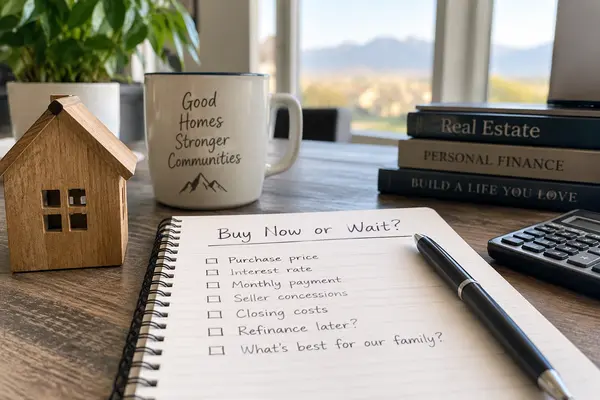
Should You Buy a Home in Tooele County Now—or Wait for Interest Rates to Drop?
Should You Buy a Home in Tooele County Now—or Wait for Interest Rates to Drop? One of the most common questions I hear from buyers right now is: “Should I buy now, or should I wait for interest rates to come down?” It’s a completely understandable question. Your interest rate has a major impact on y